Dr. Birendra Kumar Bhattacharyya
Organized by Dr. Birendra Kumar Bhattacharyya Memorial Trust
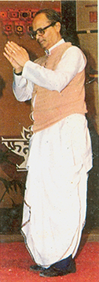 "I have always felt at one with rebels, wherever they are, because like the artist they want to reform the chaotic world by imposing on it a form of
material unity ..." said Birendra Kumar Bhattacharyya, in 1980. It was this very streak of the rebel that wouldn't let him
oblige the bureaucracy of the All India Radio, two decades earlier, by dropping the poem "Naganir Chitthi" (Letter
from a Naga woman) and choosing another poem for recitation: he would rather not participate in the poetic symposium
than toe the official line.
"I have always felt at one with rebels, wherever they are, because like the artist they want to reform the chaotic world by imposing on it a form of
material unity ..." said Birendra Kumar Bhattacharyya, in 1980. It was this very streak of the rebel that wouldn't let him
oblige the bureaucracy of the All India Radio, two decades earlier, by dropping the poem "Naganir Chitthi" (Letter
from a Naga woman) and choosing another poem for recitation: he would rather not participate in the poetic symposium
than toe the official line.
Read more...
Latest News:
10th Aug, 2022
-
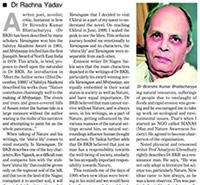
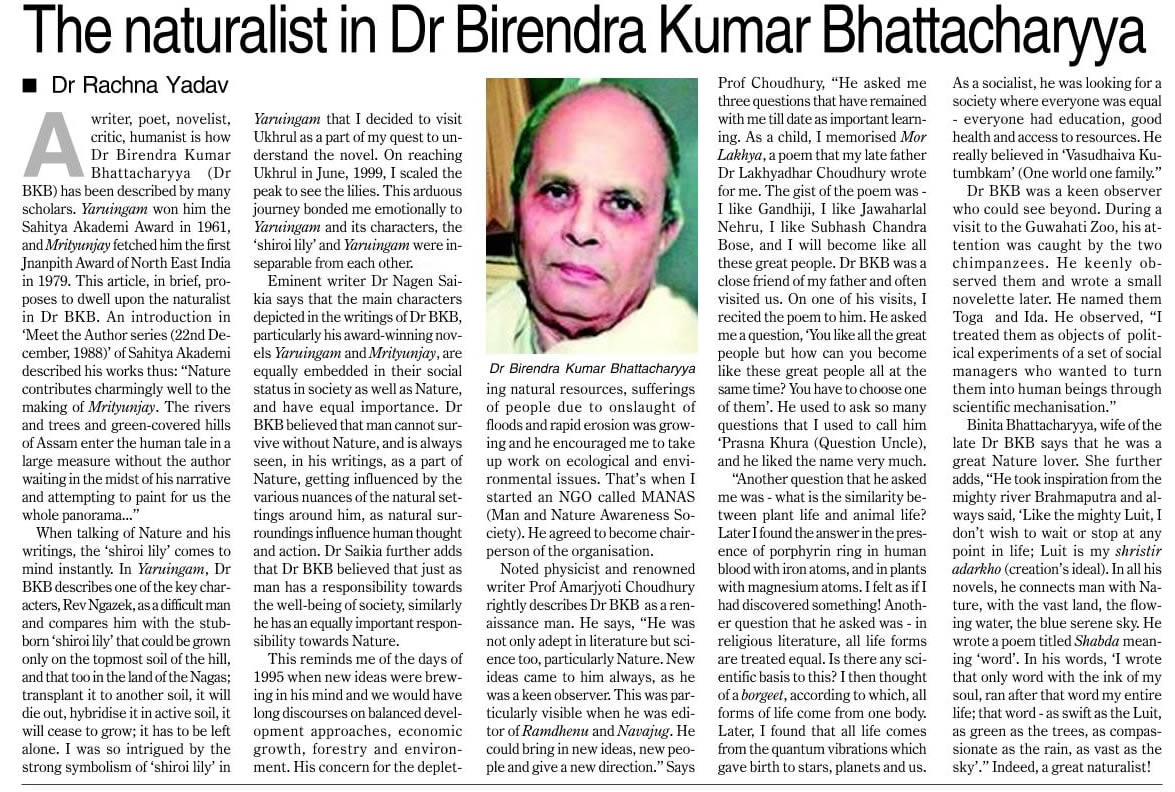
An article by Dr. Rachna Yadav: The naturalist in Dr. Birendra Kumar Bhattacharyya
Death anniversary of Dr. Birendra Kumar Bhattacharyya
07th August, 2022
Published in an English daily News Paper. -
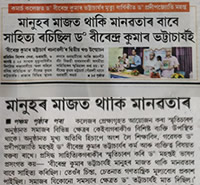
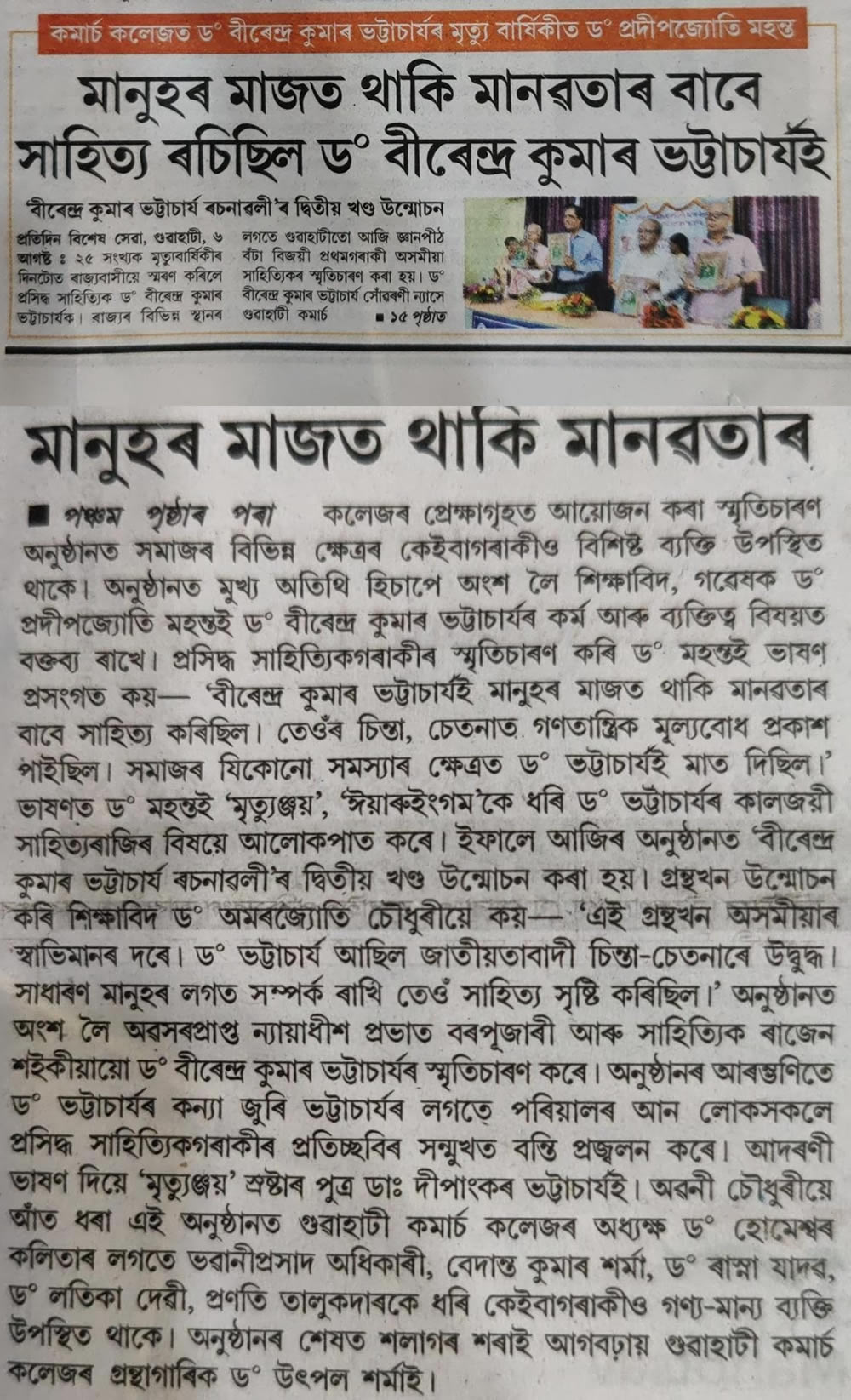
Dr Pradipjyoti Mahanta presented his speech on
25th Death anniversary of Dr. Birendra Kumar Bhattacharyya at Commerce College, Guwahati
Published in an Assamese daily News Paper. - Show/Hide
-
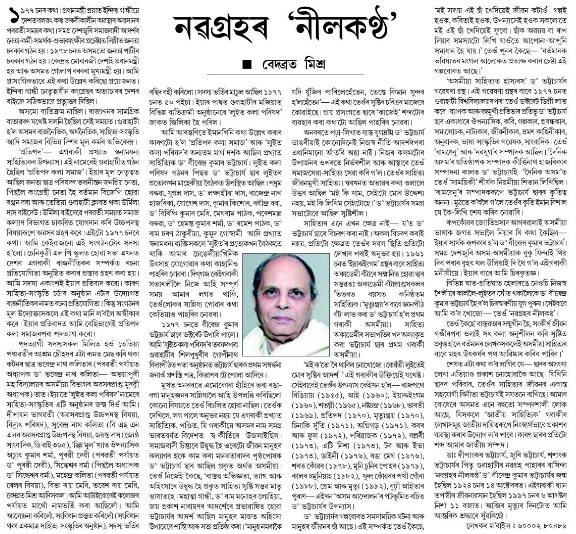
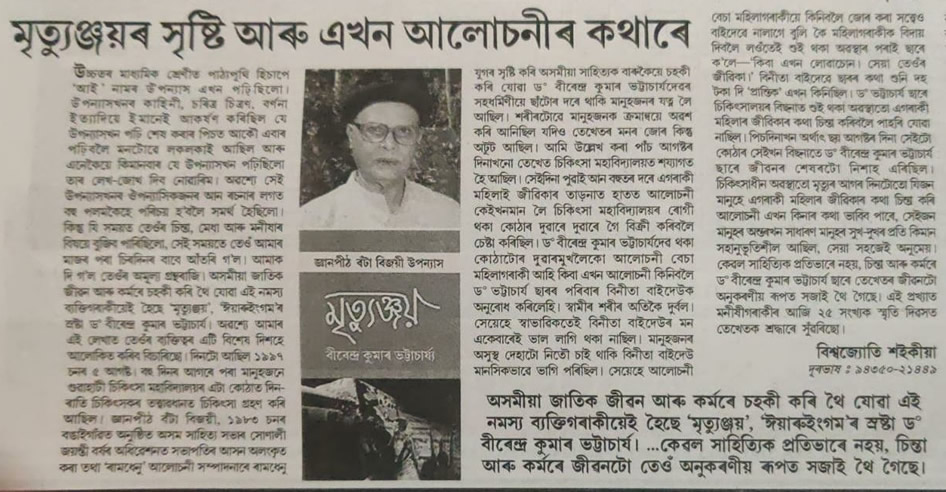
An article by Biswajyoti Saikia
Death anniversary of Dr. Birendra Kumar Bhattacharyya
07th August, 2021
Published in an Assamese Daily News Paper. -
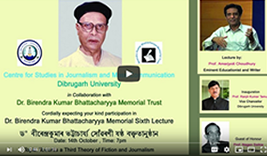
Webinar on 96th Birth Anniversary
96th Birth Anniversary of the literary legend of the country we wish to organize the 6th memorial lecture on 14th October 2020.
Centre for Studies in Journalism and Mass Communication
Dibrugarh University in Collaboration with Dr. Birendra Kumar Chattachatyya Memorial Sixth Lecture
Date: 14th Oct., 2020 -
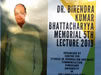 Dr. Birendra Kumar Bhattacharyya Memorial 5th Lecture 2019: Organized by Centre for Studies in Journalism and Mass Communication Dibrugarh University in Collaboration with Dr. Birendra Kumar Bhattacharyya Memorial Trust.
 -
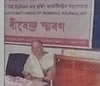 Dr. Amarjyoti Choudhury addressing on the occasion of death anniversary of "Dr. Birendra Kumar Bhattacharyya" at a memorial programme "Birendra Smaran" organized by the Dr. Birendra Kumar Bhattacharyya Memorial Trust in association with the North East Union of Working Journalists.
Read more... -
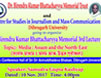 Dr. Birendra Kumar Bhattacheryya Memorial Trust and Centre for Studies in Journalism and Mass Communication of Dibrugarh University was organized "Dr. Birendra Kumar Bhattacharyya Memorial 3rd Lecture on 'Media: Assam and the North-East'" and it was held on 10th Nov, 2017 at Conference Hall of Sri Sri Aniruddhadeva Bhaban, Dibrugarh University.
Speaker: Samudra Gupta Kashyap -
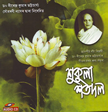 Songs of Dr. Birendra Kumar BhattacharyyaThe first audio album of few songs of Dr. Birendra Kumar Bhattacharyya the Jnanpith award winner, released by the Dr. Birendra Kumar Bhattacharyya Memorial Trust.
 -
The rare speech of Dr. birendra Kumar Bhattacharyya at the presentation ceremony of "Jnanpith" award.
-
A rare video clip of Dr. Birendra Kumar Bhattacharyya with the eminent lyricist, singer and composer Kamal Hazarika at London
-
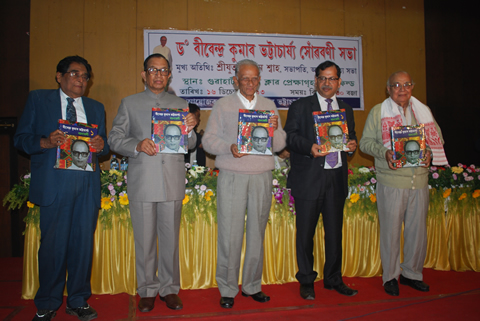
A meeting organized by "Dr. Birendra Kumar Bhattacharyya Memorial Trust" at Guwahati Town Club on 16th December, 2013 while releasing the first part of Dr. Birendra Kumar Bhattacharyya's collection.
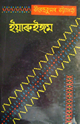 Yaruingam
Year of Publication: 1960
Publisher: Lawyers Book Stall, Guwahati
Translated into: Bengali, Malayalam
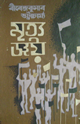 Mrityunjaya
Year of Publication: 1970
Publisher: Sahitya Prakash
Translated into: Hindi, Nepali, Bengali, English